Planning an ambient marketing stunt in Warsaw looks simple in an agency deck: a branded pedestrian crossing, a giant product on a square, a surprise on the metro stairs. On the ground the first question is far less glamorous: who manages this piece of pavement, and will their permit arrive before your launch date?
Most guides to ambient advertising stop at a definition and a gallery of famous campaigns from London or New York. This one starts where they end. It explains how to run an ambient marketing campaign in Poland, and in Warsaw in particular: choosing the spot, getting the right permits, budgeting, staffing the day and measuring the result.
At Dentsu Aegis Network I worked as an Ambient Manager and ran ambient activations for brands including Costa Coffee and Tic Tac (Ferrero). So this guide focuses on production and paperwork, not only on the creative idea.
What is ambient marketing?
Ambient marketing is brand communication placed in people’s everyday surroundings, in a spot and a form they do not expect. Instead of buying a standard ad slot, the brand uses an object, a space or a situation: stairs, a handrail, a bus shelter, lift doors. The message works because it fits the context of the place.
Ambient advertising differs from classic outdoor advertising because the medium is part of the idea. A billboard shows the same creative in Gdańsk and in Kraków. A good ambient activation only makes sense in one place, for one audience, and often only for one day.
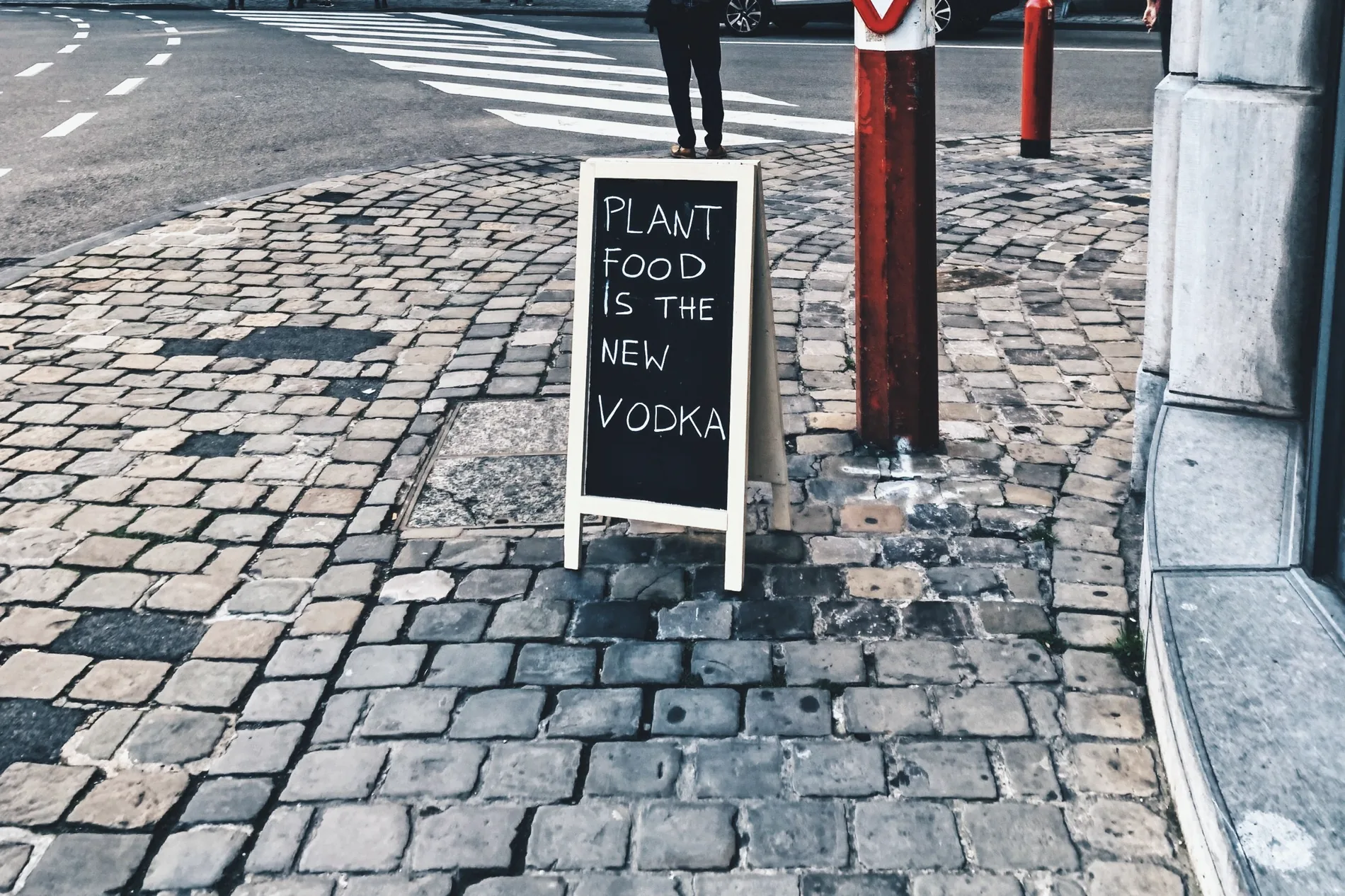
A chalkboard A-frame is the simplest street medium: a surprising line works because it meets people where they walk. On a public pavement, it still needs the site manager’s consent.
Agencies use several names for the same thing: ambient marketing, ambient media, ambient advertising, ambient campaign. In Poland you will also hear “reklama ambientowa”. I treat them as one discipline here, and I explain below where ambient ends and guerrilla marketing begins, because in Poland that line has legal consequences.
Ambient, guerrilla marketing and brand activation: what is the difference?
Ambient is a type of medium, guerrilla marketing is a way of acting, and sampling or brand activation is about putting the product in people’s hands. One activation can combine all three, but each carries different risks and different paperwork.
|
Format |
What it is |
Typical location in Warsaw |
Main formal risk |
|---|---|---|---|
|
Ambient |
message built into the surroundings, the medium is part of the idea |
street, square, metro, shopping centre, office building |
consent of the site manager, road lane occupation permit |
|
Guerrilla marketing |
low-cost surprise action, often bending the rules |
street, near big events |
no consent from the site manager, liability for a petty offence |
|
Sampling and brand activation |
handing out products, conversations with promoters |
shopping centre entrances, office lobbies, events |
consent of the site manager, product-specific rules |
|
Event marketing |
an event with a programme and invited guests |
venue, outdoor space, trade fair stand |
contract with the venue, guest safety |
I cover the event side in more detail in B2B event marketing: event types from press conference to gala.
The line between ambient and guerrilla tactics matters in practice. A stunt without the site manager’s consent is not bold creative in Poland, it is a potential offence. Article 63a of the Polish Code of Petty Offences (in Polish) provides for a restriction of liberty or a fine for placing a notice, poster, inscription or drawing in a public place without the consent of whoever manages that place.
Ambient marketing examples: which formats work in a Polish city?
The best formats are those where the location tells half the story. Here are five types of activation that most often appear in briefs, with what you need to consider for each:
-
A transformed piece of the city. Stairs, a bench, a bin or a handrail become the product or a scene from the campaign. You need consent from whoever manages that element and certainty that the wrap will not damage the surface.
-
An installation or pop-up. An object in public space that people stop to photograph. On municipal land this usually means a road lane occupation permit with a site plan and a visualisation.
-
Clean graffiti. The message appears by power-washing dirty pavement through a stencil, without paint. No paint does not change the fact that it is an inscription in a public place, so it is safer to assume you need the site manager’s consent.
-
Transport and building media. These are the formats closest to classic ambient media: handles, doors, escalators, wraps in a shopping centre or office building. Your partner here is the building manager or the media owner, not the city.
-
A people-led activation. Actors, promoters, a short happening or sampling with an element of surprise. Most depends on the crew, the script and the bad weather plan.
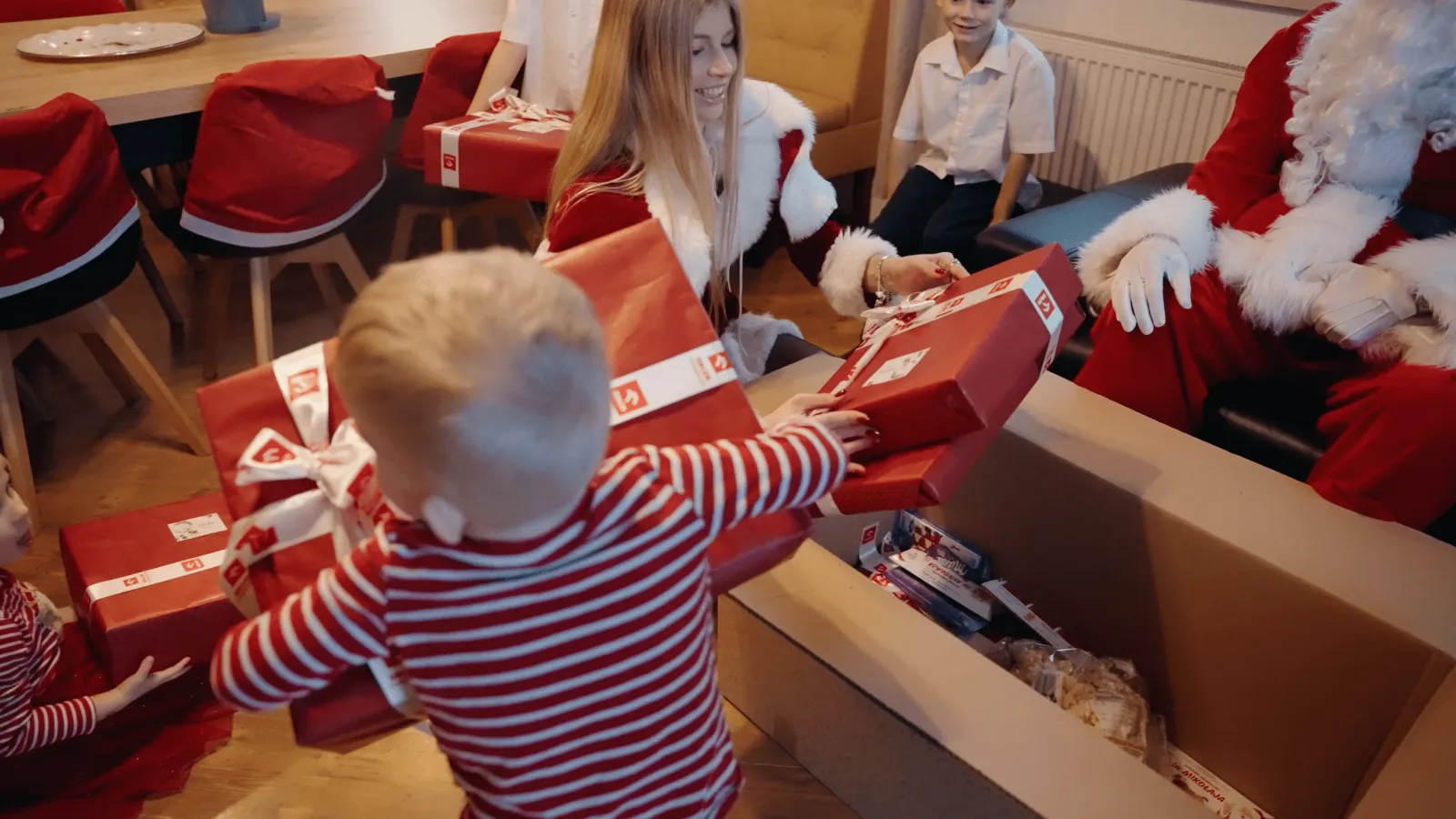
One example from my own work is the Christmas campaign for Fundacja ORLEN, the ORLEN Foundation, for children in family-type children’s homes. Alongside personalised parcels for more than a hundred homes across Poland, we organised visits from Santa Claus to selected homes, and a film crew recorded them for a social media clip and a longer video. It is a good example of a people-led activation: the result depended on the visit script, the crew and the documentation rather than on the medium itself.

ORLEN Foundation campaign: parcels reached more than a hundred homes, and a film crew recorded Santa’s visits.
I deliberately do not repeat the famous international campaigns that every guide lists. They are easy to find and say little about how to get an activation approved and built in Poland.
When does ambient advertising make sense, and when does it not?
Ambient advertising makes sense when you have one specific place where your audience goes regularly, and an idea that cannot exist without that place. It does not make sense when you need national reach or sales overnight.
Ambient marketing works well when:
-
you are launching a product or service in one city, for example a Warsaw office opening, and want people to talk about it;
-
you are building your employer brand around an office building, campus or university;
-
you want to catch conference or trade fair guests before they enter the venue;
-
you plan for the activation to live on in photos, video and media coverage.
It is better to skip it when:
-
you have a production budget but nothing to show the activation online;
-
there is less time left than the permits take;
-
the idea requires touching greenery, a listed building or the road surface;
-
your product falls under an advertising ban in Poland (see alcohol below).
In B2B, ambient rarely stands alone. It works best as part of a bigger event: a conference, a product launch, a trade fair stand or a client meeting. An installation outside the venue or a surprise on the guests’ route strengthens the event instead of competing with it for budget. If you are planning the whole event, read how to plan a corporate event.
How to plan an ambient campaign in Warsaw step by step
Start with the location and its manager, and only then polish the creative. An idea you cannot get approved in time is just a design cost. This is the order I work in:
-
One goal, one metric. Write down what should happen after the activation: conversations on site, online reach, sign-ups for an event, press coverage. One main metric is enough.
-
The location and who manages it. In Warsaw, regional, district and national roads (except expressways and motorways) are run by the Municipal Roads Authority (Zarząd Dróg Miejskich, ZDM), some streets in the city centre by the Public Spaces Authority (Zarząd Terenów Publicznych, ZTP), and municipal roads by district offices. This is set out in the city’s guide to road lane occupation (in Polish), together with the ZDM and ZTP street lists.
-
Site visit. Check footfall at the time of the activation, gradients, power supply, a loading point and the evacuation route. I describe what I check in event site visit: what to check in a venue before signing.
-
Application and permits. Submit a complete set of documents to the site manager. The Warsaw details are in the next section.
-
Production and a test build. Order elements that can handle rain and wind. Do a test build in the warehouse so you know how long it really takes.
-
Crew and briefing. Decide who builds, who guards the installation, who talks to passers-by and who carries the permit. Bring everyone together for a pre-event briefing. If promoters are involved, read how to hire professional event staff.
-
Activation day with a plan B. Have the permit or contract on site, a rain version and one person documenting everything from build to strike.
-
Measurement and report. Collect data within a week, while the material is fresh, and compare it with the metric from step 1.
On the ORLEN Foundation Christmas campaign this order mattered: several weeks of work covered choosing and ordering gifts, warehousing and packing, visits to the homes and film production, and the parcels had to arrive before Christmas.
An indicative timeline for an activation in public space
The timeline follows official deadlines. Under Article 35 of the Polish Code of Administrative Procedure (in Polish), a case that requires an investigation should be settled within a month, and a particularly complex one within two months. Add time for documents and production.
|
When |
What you do |
|---|---|
|
10 to 8 weeks before |
goal, location, site manager, site visit |
|
8 to 6 weeks before |
application with site plan and visualisation, traffic management plan if needed |
|
6 to 2 weeks before |
production, test build, insurance, crew |
|
one week before |
briefing, plan B, photo and video plan |
|
activation day |
build, activation, documentation, strike and clean-up |
|
one week after |
data, report, social media content |
On private property, where a contract with the manager replaces an official decision, the timeline can usually be shorter.
What permits do you need for ambient advertising in Warsaw?
You need consent from whoever manages the space. On pavements and squares that is the road authority, in parks the greenery authority, and in shopping centres, office buildings or stations the owner or property manager. Without it you risk a financial penalty or liability for a petty offence.
Pavements, squares and streets: road lane occupation
For an activation in the road lane you need a permit from the road authority. For roads run by ZDM, the application to occupy the road lane for an event, exhibition or photo shoot (in Polish) must include:
-
a site plan at 1:1000 or 1:500 on a current survey map, showing the boundaries and dimensions of the occupied area;
-
a detailed description and a visualisation showing the installation in its surroundings;
-
a traffic management plan if the activation affects traffic or visibility;
-
opinions from other bodies, such as the Greenery Authority or the heritage conservator, where the location requires them.
The fee is calculated as the area multiplied by the daily rate per square metre for the road category and by the number of days, and an occupation shorter than 24 hours counts as a full day. The rates are set by Warsaw City Council resolution no. XXXI/666/2004, which the same city page refers to.
For occupying the road lane without a permit, the road authority imposes a penalty of ten times the fee (in Polish). For an activation covering several dozen square metres in a busy spot, that is a painful difference.
Parks, squares and riverside boulevards: the Greenery Authority
On land managed by the Warsaw Greenery Authority (Zarząd Zieleni m.st. Warszawy, ZZW), outdoor events, including photo shoots and advertising productions, require prior consent and a signed lease agreement. The event must be free and open, without fencing off the area. Among other things, you may not hang banners or cables on trees and lamp posts, set up inflatables, or drive and park on the grass.
Not every park in Warsaw belongs to ZZW. Some green spaces are run by district offices or by the city forests, so check the manager on the ZZW map of managed areas.
Shopping centres, office buildings and stations: the property manager
On private property there is no official decision, there is a contract with the manager. This is often the fastest route: the manager knows their own safety rules, delivery hours and technical limits. Without their consent you are back to the risk under Article 63a of the Code of Petty Offences.
Large crowds: mass events
If the activation could draw a crowd, check the rules on mass events. The Greenery Authority states that events for 1,000 people or more need a mass event permit, and the city of Warsaw accepts that application no later than 30 days before the event.
Warsaw’s landscape resolution
As of November 2026, Warsaw has restarted work on a landscape resolution (in Polish) that is meant to set rules for advertising, fences and street furniture, and the draft has been put to public consultation (in Polish). Before a longer installation, check whether the resolution has come into force and what it says about your format.
Passers-by in photos and video
Photos and video are half the value of ambient, so plan for image rights. Under Article 81 of the Polish Copyright Act (in Polish), distributing a person’s image requires their permission, with exceptions including a person who is only a detail of a whole, such as a gathering, a landscape or a public event. If a passer-by is the main subject of a shot, ask for written consent on the spot.
On the ORLEN Foundation campaign we filmed children in the homes, so we handled image consent with the help of a law firm.
Alcohol and other restricted products
If you are an international drinks brand, check Polish rules before you brief the creative. The Polish Act on Upbringing in Sobriety (in Polish), in Article 13¹, bans the advertising and promotion of alcoholic beverages, with the exception of beer under conditions set out in the act. On 8 October 2026 the Sejm passed an amendment (in Polish) that also bans beer advertising, and on 6 November 2026 the Senate approved it with amendments (in Polish), including one allowing advertising of non-alcoholic beer, with the changes due to take effect in June 2027.
Check which version of the rules applies on the day of your activation.
How much does an ambient campaign in Poland cost?
There is no single price, because every activation is different. The budget, however, always consists of the same lines, and the site fee is only one of them. Before you ask for a quote, check that it covers every row in this table:
|
Budget line |
What drives the cost |
|---|---|
|
Concept and design |
number of options, visualisations needed for the application |
|
Application documents |
site plan, traffic management plan, opinions |
|
Site fee |
on city land: area × daily rate × number of days; on private property: contract with the manager |
|
Production and build |
materials, weather resistance, transport, night build |
|
Crew |
promoters, security, technicians, on-site coordinator |
|
Liability insurance |
value of the installation, number of people, duration |
|
Photo and video |
number of cameras, drone (check the rules for flying in the city), editing |
|
Strike and clean-up |
restoring the site, removing elements |
All costs in Poland are quoted in Polish złoty (PLN), usually net of VAT, so ask your partner to confirm both. When you send a brief, include the location, date and format: they drive most of the lines in this table.
The line most often forgotten is documentation. The activation lasts a few hours, while the photos and video work for weeks afterwards, and they decide how many people see the ambient beyond the street.
How do you measure the results of ambient marketing?
Measure what you set as the goal before the activation. Ambient without a measurement plan ends with nice photos and no answer when the board asks what it achieved.
Data you can collect for most activations:
-
the number of people who stopped at the installation or talked to the crew;
-
visits from a QR code to the campaign page, tagged with UTM parameters;
-
samples handed out or marketing consents collected;
-
reach and engagement of social media content, organic and paid separately;
-
media and creator coverage that was not paid for;
-
changes in branded search volume in the weeks after the activation;
-
leads and enquiries in your CRM with a tagged source.
In B2B the last one matters most. If the ambient supports a conference, compare the number of sales conversations with the previous edition without an activation. For setting goals and metrics across your marketing, see my guide to B2B marketing strategy.
Common ambient advertising mistakes
Most mistakes happen because the creative runs ahead of the paperwork. These are the ones I see most often:
-
Idea before location. The creative is ready before anyone checks who manages the site and whether consent is realistic.
-
Late application. The activation date does not allow the month or two an official decision may take.
-
No weather plan. A paper installation or chalk lettering with rain in the forecast.
-
No documentation. The activation happened, but nobody filmed people’s reactions in good quality.
-
No image consent. The best shot shows a passer-by close up, and nobody asked them for permission.
-
No follow-through. Someone scanned the QR code and landed on the homepage instead of the campaign page.
Imagine an installation on a square in central Warsaw where the decision did not arrive in time, and the crew put it up anyway. Instead of the normal fee you may pay ten times as much, and the campaign footage shows an activation without the city’s consent. Moving the date by two weeks would have cost less.
If your activation will take place in Warsaw, see how I work as an event manager in Warsaw.
Summary
Ambient marketing works when the idea fits one place and the people who pass through it. In a Polish city, success depends more on the permit calendar than on the creative, so start with the site manager and allow 8 to 10 weeks. Budget for documentation and measurement too, because they decide how many people see the activation beyond the street.
This article describes Polish rules and procedures as of 14 November 2026 and is not legal advice. Check the current rules with the site manager before your activation.
FAQ: ambient marketing in Poland
Is ambient marketing the same as guerrilla marketing?
No. Ambient describes where the message is placed: advertising built into a spot where people do not expect it. Guerrilla marketing describes a way of acting, a low-cost surprise that often bends the rules. One activation can be both, but in Poland only ambient with a contract or permit from the site manager is legally safe.
Do you need a permit for ambient advertising in Warsaw?
Yes. On pavements and squares you need a permit from the road authority, which in Warsaw means ZDM, ZTP or a district office. In parks you need consent and a lease from the greenery manager, and in shopping centres or office buildings a contract with the property manager. Occupying the road lane without a permit can cost ten times the normal fee.
How far ahead should you plan an ambient campaign in Poland?
8 to 10 weeks ahead if the activation needs an official decision. A case requiring an investigation should be settled within a month, and a particularly complex one within two months. Add time for application documents, production and a test build. On private property, where a contract replaces the decision, a shorter lead time is usually enough.
Does ambient advertising work for B2B brands?
Yes, best as part of a bigger event. An installation outside a conference venue, an activation on the route of trade fair guests or a surprise at a client’s office strengthens an event that is happening anyway. Measure the effect in sales conversations and leads with a tagged source, not only in photo reach.
Do passers-by have to agree to appear in campaign photos?
Not always. Under Polish law you do not need consent when a person is only a detail of a whole, for example part of a crowd at a public event. When a passer-by is the main subject of a photo or video, you need their permission to publish their image. The simplest approach is written consent on the spot, before the content goes on social media.
Can an international drinks brand run an ambient activation in Poland?
Not in any form. Current Polish law bans the advertising and promotion of alcoholic beverages, with the exception of beer under conditions set out in the act. An amendment passed in 2026 is due to extend the ban to beer, and the Senate added an exception for non-alcoholic beer. Check the rules in force on your activation date and have the concept reviewed by a Polish lawyer.
Planning an ambient activation in Warsaw or around your event in Poland?
Tell me what you want to achieve and where. I will check whether the idea can be delivered by your date and tell you where to start. See how I work on B2B event management, or get in touch.