Produkcja eventu
Event Site Visit: What to Check in a Venue Before Signing
Site visit before an event: what to check in the venue before you sign the contract. Room, tech, logistics, back-of-house and questions to ask the hotel.
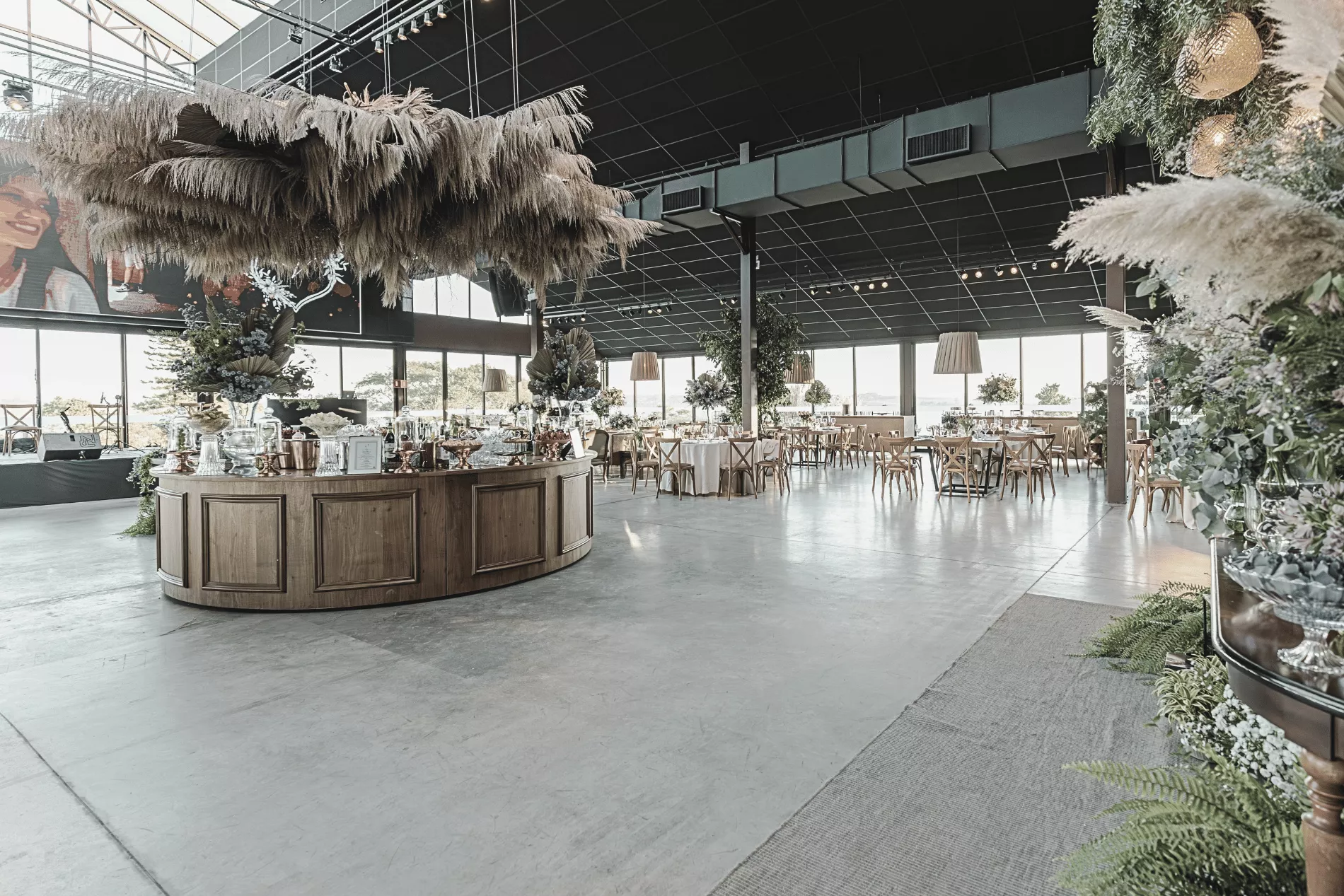
A site visit (also called a site inspection in the international industry) is a planned inspection of the event venue, during which you verify whether the venue really matches the run of show, the brief and the technical and client requirements.
There is a fundamental difference between looking around a venue and carrying out a site visit. Someone looking at a room asks, "Do I like it?" Someone running a site visit asks, "Will an 8 by 4 metre stage fit here, where will guests enter and where will suppliers, and where do I put the speakers' green room?" The first question is about aesthetics, the second about production and technical matters.
The logic of a site visit comes down to a simple rule: the earlier you spot a problem, the faster, more effectively and more cheaply you can solve it. For example, insufficient connected power found during a site visit means a calm conversation with the venue about a generator. The same problem found on the build day means renting a generator at an emergency rate, a delayed build and a real risk that the event starts late. That is why professional production treats the site visit as a mandatory checkpoint, not an optional one.
When is the best time to do a site visit before an event?
In the textbook model, a site visit is planned well in advance: even around twelve months before a large event, with follow-up visits roughly six months and one month before the date. Such a schedule gives you room to breathe, with time to negotiate, compare several venues and finalize logistics.
In market practice, however, a single visit a few months before the event has become the norm. That is understandable: calendars are tight and decisions are made faster than they used to be. With one visit, preparation matters even more. You get one walk through the venue, so you need to extract as much information as possible, and for that you need a well-prepared checklist.
There are situations where one visit is not enough and it is worth planning more:
Large conferences and galas with extensive set design: the second visit is used to verify technical arrangements with the build crew.
Events with online streaming or a hybrid format, where the internet connection and technical production are critical.
Venues undergoing renovation or reconstruction in the meantime: you need to check the actual state, not the declared one.
Outdoor events, where conditions change with the seasons and it is worth seeing the site at a time of year close to the event date.
How to prepare for a site visit
A site visit without preparation is a waste of time for everyone: the event manager, the venue representative, the client and the suppliers. Before you walk into the venue, you should have the event assumptions gathered and know what you are looking for. The foundation is the brief: a well-prepared brief for an event agency lets you immediately check the room's specific parameters against real needs, instead of looking at the space "in general".
Before the visit, it is also worth reviewing the materials provided by the venue: the technical floor plan (a scaled plan of the room), photos, a virtual tour and the technical specification.
You can also prepare a working run of show or agenda and a preliminary space layout or visualization. Knowing where the stage and registration are meant to go gives the inspection direction.
It also helps to draw up a "must-see" list, meaning places you absolutely have to see: the technical back-of-house, dressing rooms, the delivery route and the restrooms.
It is also worth agreeing with the venue who will lead the tour, ideally someone who knows the technical side, not only the sales side.
What to check during a site visit
Below are six areas that a professional pre-event site visit always covers. The order roughly follows how the event "flows" through the venue, from equipment delivery to the departure of the last guest.
Access, parking and delivery logistics
For guests, accessibility is what counts: getting there by public transport, the distance from the train station or airport, and the number of parking spaces. A well-connected venue with ample parking has a real effect on attendance and on the mood in which participants arrive.
For those responsible for event production, however, delivery logistics matter most, that is load-in and load-out: bringing equipment and set construction in and taking it out. Here you check:
The width and height of gates and entrance doors: whether a delivery van can get through and whether large set pieces will fit.
The availability of a loading ramp and a freight lift, as well as its capacity and cabin dimensions.
Access hours for the build and strike: whether you can get in the evening before or only on the morning of the event.
The option to store equipment safely overnight if the build runs in several stages.
Parking for the production van and suppliers' vehicles.
A gate height limit or the lack of a freight lift are details that are easy to overlook and that can derail the entire build schedule.
Space layout and guest flow
The organizer's job is to design the guest's "journey": a logical path from the entrance, through registration, to the main room and on to the exit. During a site visit, this is exactly the angle from which you look at the space.
Entrances and exits: do they allow smooth flow, or do bottlenecks form?
Registration point: where to place the welcome desk so that it does not block traffic from the entrance and queues do not build up.
Cloakroom: not just the location but the capacity; at a larger event a single cloakroom is often not enough and creates a jam.
Restrooms: the number should match the number of guests, and so should their condition; this is a detail by which participants judge the whole venue.
Signage and visibility: will guests find their way intuitively, or will extra directional signs be needed?
Technology, power and internet
The basis of the conversation here is the technical rider, that is, the specification of the event's technical requirements (sound, lighting, multimedia, power supply). You check the following points one by one.
Audiovisual (AV) equipment: does the venue have its own sound system, projectors, screens and microphones, or do you need to bring in external equipment?
Connected power: can the electrical installation handle an LED screen, stage lighting and catering at the same time? If not, you need a generator.
Rigging points, meaning places where equipment can be hung from the ceiling structure, and permissible loads: these determine whether you can hang a truss with lighting.
Blackout capability: rooms with large windows and no curtains can be useless for projection.
Wi-Fi and internet connection: the rule is to assume nothing and check the real bandwidth. For a hybrid event, online streaming or voting in an app, a stable connection is critical.
Noise limits and quiet hours: does the venue have volume or time restrictions that will affect a concert or the official part?
Catering and back-of-house
The part guests see is the room and the serving points. The invisible part, the back-of-house, decides whether the service runs smoothly. It is worth checking the following elements.
The location of the kitchen and catering serving points relative to the room: can the staff reach guests without crossing the main circulation route?
The back-of-house, that is, the work zone closed to guests: space for catering preparation, storage and room for the crew.
The dressing room and a room for speakers and performers (green room): a place where they can prepare and rest away from the main room.
Rules for working with suppliers: does the venue impose a list of preferred suppliers, allow you to bring your own, or operate on a dry-hire basis, renting the "bare" venue where you arrange all service and equipment yourself? The supplier question is often key to both budget and quality. A preferred list can be convenient, but it limits your choice and your influence on rates, so it needs to be verified before signing the contract, not after.
Branding and brand exposure
For corporate events such as product launches, conferences and galas, the venue is a backdrop for the brand. During the site visit you assess its branding potential.
Surfaces where the key visual will hang, meaning the main graphic motif of the event that ties the identity together.
Spots for backdrops, roll-ups, directional signage and photo zones.
The option to project a logo with light through a gobo, a template inserted into a spotlight that casts a pattern or logo onto a wall or floor.
The venue's restrictions on altering the space (what you must not cover, where you must not drill).
A good practice is to ask the venue representative for photos of earlier events with branding in this space, which is the fastest way to judge the real possibilities. Experience from producing events for brands such as ORLEN and mBank shows that consistent brand exposure in the space is what stays in guests' memory the most.
Formalities, safety and other events
Finally, an area that is easy to skip and that can block an event.
Permits: which ones are required for a given type of event and who obtains them.
Safety (health and safety and fire protection): evacuation routes, the maximum permitted number of people in the room, and the placement of fire extinguishing equipment.
Accessibility for people with disabilities: lifts, ramps, adapted restrooms; this is a matter of both obligation and real inclusivity.
Parallel events in the venue: if the venue hosts several events at once, check the risk of noise from next door, competition for parking and crowding in shared areas, and agree this with the venue manager.
What to ask the venue representative
Whatever the type of event, there are a few questions worth always asking, because the answers genuinely change the run of show and the cost estimate:
Until what time can the event run, and are there surcharges for overtime?
What is the maximum capacity of each room in the layouts we are interested in?
Which permits are required, and who is responsible for obtaining them?
Where are the storage space, back-of-house and the speakers' green room?
What are the branding options inside and outside the venue?
What exactly does the quoted price include, and what costs extra?
That last question leads straight to the budget.
Site visit and budget: how to catch hidden costs
The biggest financial threat to an event is not the price quoted in the offer but the costs that are missing from it. The site visit is the best moment to surface them, before you put the venue into the cost estimate. Ask for a full breakdown of items that are often outside the base rate:
Additional rental hours outside the agreed time window (including for build and strike).
Venue security and technical staff.
Cleaning, especially so-called deep cleaning after the event.
Electricity consumption and use of the venue's equipment.
Any deposit and the conditions for its return.
Contract signing terms and booking cancellation terms (including deadlines).
The rule is simple: every cost you learn about during the site visit should go into the contract in writing. Clarifying these issues proactively not only protects the budget from overruns but also sets the relationship with the venue on clear terms from the start. That is why the site visit and work on the cost estimate should go hand in hand.
How to recognize a professional venue and partner
A site visit is not only a test of the space but also a test of the venue representative's professionalism, flexibility and communication. This matters because you will be working with the venue throughout the whole production process. Professional venues provide the following.
Cost transparency: the account manager talks about prices and surcharges openly, on their own initiative, not only when asked.
Up-to-date technical plans to scale: a professional venue shares them without being asked, because it knows they are essential for planning the layout.
A single point of contact: one person you deal with before, during and after the event, which greatly simplifies communication.
No "promising everything": if the venue cannot provide something, it says so honestly and proposes an alternative, instead of promising and letting you down on the event day.
A visit agenda tailored to your event: the tour and the room layouts shown match your needs and are not a replay of a standard presentation.
What to do after a site visit
The significance and weight of a site visit only become fully visible once all the findings are gathered and organized. Right after the visit, it is worth doing the following:
Organize the documentation, including photos and notes on the floor plan, while everything is still fresh in your memory.
Prepare a short report for decision makers: the venue's strengths, limitations, risks and a cost estimate.
Gather the team and make the decision together: do we stay with this venue or check another one?
If you are viewing several venues, a standardized checklist lets you compare them against the same objective criteria.
Summary
A site visit before an event is not a formality but the point at which the feasibility of the whole event is decided. There are a few key rules: prepare the brief and a checklist, check the venue for delivery logistics, guest flow, technology, catering, branding and formalities, uncover all hidden costs and put them in the contract, and after the visit write up your conclusions and make the decision as a team. The more you catch at this stage, the less you pay later, both financially and in stress.
FAQ: frequently asked questions about site visits before an event
What is a site visit before an event?
It is a planned inspection of a venue for a specific event, during which you verify whether the space matches the run of show, the brief, the technical requirements and other assumptions. It differs from simply looking at a room in that it is carried out with a checklist and focused primarily on feasibility, not only on aesthetics.
How long does a site visit take and how many times is it worth repeating?
A single visit usually takes from one to several hours, depending on the scale of the venue and the event. In the ideal model you plan several visits, even a year, six months and one month before the event, but the market standard has become one visit a few months before the date. For large productions with extensive technology, it is worth planning a second visit with the build crew and/or the technical or multimedia team.
Who should attend the site visit on the organizer's side?
Ideally the person responsible for production or the event manager and, for larger events, a technical specialist as well. On the venue's side, it is worth having someone who knows the technical side, not only the sales side, lead the tour. Only then will you get reliable answers about connected power, rigging or build hours.
Is a site visit needed for a small event?
Yes, although its scope is then much narrower. Even for an intimate meeting, it is worth checking accessibility, technology, catering and hidden costs, because a power problem or a lack of back-of-house space hits just as hard regardless of the number of guests. The scale of the event changes the length of the checklist, not the principle itself.
Planning a B2B event? Get in touch to discuss the project concept and receive an individual quote tailored to the scale and nature of your event.
A site visit (also called a site inspection in the international industry) is a planned inspection of the event venue, during which you verify whether the venue really matches the run of show, the brief and the technical and client requirements.
There is a fundamental difference between looking around a venue and carrying out a site visit. Someone looking at a room asks, "Do I like it?" Someone running a site visit asks, "Will an 8 by 4 metre stage fit here, where will guests enter and where will suppliers, and where do I put the speakers' green room?" The first question is about aesthetics, the second about production and technical matters.
The logic of a site visit comes down to a simple rule: the earlier you spot a problem, the faster, more effectively and more cheaply you can solve it. For example, insufficient connected power found during a site visit means a calm conversation with the venue about a generator. The same problem found on the build day means renting a generator at an emergency rate, a delayed build and a real risk that the event starts late. That is why professional production treats the site visit as a mandatory checkpoint, not an optional one.
When is the best time to do a site visit before an event?
In the textbook model, a site visit is planned well in advance: even around twelve months before a large event, with follow-up visits roughly six months and one month before the date. Such a schedule gives you room to breathe, with time to negotiate, compare several venues and finalize logistics.
In market practice, however, a single visit a few months before the event has become the norm. That is understandable: calendars are tight and decisions are made faster than they used to be. With one visit, preparation matters even more. You get one walk through the venue, so you need to extract as much information as possible, and for that you need a well-prepared checklist.
There are situations where one visit is not enough and it is worth planning more:
Large conferences and galas with extensive set design: the second visit is used to verify technical arrangements with the build crew.
Events with online streaming or a hybrid format, where the internet connection and technical production are critical.
Venues undergoing renovation or reconstruction in the meantime: you need to check the actual state, not the declared one.
Outdoor events, where conditions change with the seasons and it is worth seeing the site at a time of year close to the event date.
How to prepare for a site visit
A site visit without preparation is a waste of time for everyone: the event manager, the venue representative, the client and the suppliers. Before you walk into the venue, you should have the event assumptions gathered and know what you are looking for. The foundation is the brief: a well-prepared brief for an event agency lets you immediately check the room's specific parameters against real needs, instead of looking at the space "in general".
Before the visit, it is also worth reviewing the materials provided by the venue: the technical floor plan (a scaled plan of the room), photos, a virtual tour and the technical specification.
You can also prepare a working run of show or agenda and a preliminary space layout or visualization. Knowing where the stage and registration are meant to go gives the inspection direction.
It also helps to draw up a "must-see" list, meaning places you absolutely have to see: the technical back-of-house, dressing rooms, the delivery route and the restrooms.
It is also worth agreeing with the venue who will lead the tour, ideally someone who knows the technical side, not only the sales side.
What to check during a site visit
Below are six areas that a professional pre-event site visit always covers. The order roughly follows how the event "flows" through the venue, from equipment delivery to the departure of the last guest.
Access, parking and delivery logistics
For guests, accessibility is what counts: getting there by public transport, the distance from the train station or airport, and the number of parking spaces. A well-connected venue with ample parking has a real effect on attendance and on the mood in which participants arrive.
For those responsible for event production, however, delivery logistics matter most, that is load-in and load-out: bringing equipment and set construction in and taking it out. Here you check:
The width and height of gates and entrance doors: whether a delivery van can get through and whether large set pieces will fit.
The availability of a loading ramp and a freight lift, as well as its capacity and cabin dimensions.
Access hours for the build and strike: whether you can get in the evening before or only on the morning of the event.
The option to store equipment safely overnight if the build runs in several stages.
Parking for the production van and suppliers' vehicles.
A gate height limit or the lack of a freight lift are details that are easy to overlook and that can derail the entire build schedule.
Space layout and guest flow
The organizer's job is to design the guest's "journey": a logical path from the entrance, through registration, to the main room and on to the exit. During a site visit, this is exactly the angle from which you look at the space.
Entrances and exits: do they allow smooth flow, or do bottlenecks form?
Registration point: where to place the welcome desk so that it does not block traffic from the entrance and queues do not build up.
Cloakroom: not just the location but the capacity; at a larger event a single cloakroom is often not enough and creates a jam.
Restrooms: the number should match the number of guests, and so should their condition; this is a detail by which participants judge the whole venue.
Signage and visibility: will guests find their way intuitively, or will extra directional signs be needed?
Technology, power and internet
The basis of the conversation here is the technical rider, that is, the specification of the event's technical requirements (sound, lighting, multimedia, power supply). You check the following points one by one.
Audiovisual (AV) equipment: does the venue have its own sound system, projectors, screens and microphones, or do you need to bring in external equipment?
Connected power: can the electrical installation handle an LED screen, stage lighting and catering at the same time? If not, you need a generator.
Rigging points, meaning places where equipment can be hung from the ceiling structure, and permissible loads: these determine whether you can hang a truss with lighting.
Blackout capability: rooms with large windows and no curtains can be useless for projection.
Wi-Fi and internet connection: the rule is to assume nothing and check the real bandwidth. For a hybrid event, online streaming or voting in an app, a stable connection is critical.
Noise limits and quiet hours: does the venue have volume or time restrictions that will affect a concert or the official part?
Catering and back-of-house
The part guests see is the room and the serving points. The invisible part, the back-of-house, decides whether the service runs smoothly. It is worth checking the following elements.
The location of the kitchen and catering serving points relative to the room: can the staff reach guests without crossing the main circulation route?
The back-of-house, that is, the work zone closed to guests: space for catering preparation, storage and room for the crew.
The dressing room and a room for speakers and performers (green room): a place where they can prepare and rest away from the main room.
Rules for working with suppliers: does the venue impose a list of preferred suppliers, allow you to bring your own, or operate on a dry-hire basis, renting the "bare" venue where you arrange all service and equipment yourself? The supplier question is often key to both budget and quality. A preferred list can be convenient, but it limits your choice and your influence on rates, so it needs to be verified before signing the contract, not after.
Branding and brand exposure
For corporate events such as product launches, conferences and galas, the venue is a backdrop for the brand. During the site visit you assess its branding potential.
Surfaces where the key visual will hang, meaning the main graphic motif of the event that ties the identity together.
Spots for backdrops, roll-ups, directional signage and photo zones.
The option to project a logo with light through a gobo, a template inserted into a spotlight that casts a pattern or logo onto a wall or floor.
The venue's restrictions on altering the space (what you must not cover, where you must not drill).
A good practice is to ask the venue representative for photos of earlier events with branding in this space, which is the fastest way to judge the real possibilities. Experience from producing events for brands such as ORLEN and mBank shows that consistent brand exposure in the space is what stays in guests' memory the most.
Formalities, safety and other events
Finally, an area that is easy to skip and that can block an event.
Permits: which ones are required for a given type of event and who obtains them.
Safety (health and safety and fire protection): evacuation routes, the maximum permitted number of people in the room, and the placement of fire extinguishing equipment.
Accessibility for people with disabilities: lifts, ramps, adapted restrooms; this is a matter of both obligation and real inclusivity.
Parallel events in the venue: if the venue hosts several events at once, check the risk of noise from next door, competition for parking and crowding in shared areas, and agree this with the venue manager.
What to ask the venue representative
Whatever the type of event, there are a few questions worth always asking, because the answers genuinely change the run of show and the cost estimate:
Until what time can the event run, and are there surcharges for overtime?
What is the maximum capacity of each room in the layouts we are interested in?
Which permits are required, and who is responsible for obtaining them?
Where are the storage space, back-of-house and the speakers' green room?
What are the branding options inside and outside the venue?
What exactly does the quoted price include, and what costs extra?
That last question leads straight to the budget.
Site visit and budget: how to catch hidden costs
The biggest financial threat to an event is not the price quoted in the offer but the costs that are missing from it. The site visit is the best moment to surface them, before you put the venue into the cost estimate. Ask for a full breakdown of items that are often outside the base rate:
Additional rental hours outside the agreed time window (including for build and strike).
Venue security and technical staff.
Cleaning, especially so-called deep cleaning after the event.
Electricity consumption and use of the venue's equipment.
Any deposit and the conditions for its return.
Contract signing terms and booking cancellation terms (including deadlines).
The rule is simple: every cost you learn about during the site visit should go into the contract in writing. Clarifying these issues proactively not only protects the budget from overruns but also sets the relationship with the venue on clear terms from the start. That is why the site visit and work on the cost estimate should go hand in hand.
How to recognize a professional venue and partner
A site visit is not only a test of the space but also a test of the venue representative's professionalism, flexibility and communication. This matters because you will be working with the venue throughout the whole production process. Professional venues provide the following.
Cost transparency: the account manager talks about prices and surcharges openly, on their own initiative, not only when asked.
Up-to-date technical plans to scale: a professional venue shares them without being asked, because it knows they are essential for planning the layout.
A single point of contact: one person you deal with before, during and after the event, which greatly simplifies communication.
No "promising everything": if the venue cannot provide something, it says so honestly and proposes an alternative, instead of promising and letting you down on the event day.
A visit agenda tailored to your event: the tour and the room layouts shown match your needs and are not a replay of a standard presentation.
What to do after a site visit
The significance and weight of a site visit only become fully visible once all the findings are gathered and organized. Right after the visit, it is worth doing the following:
Organize the documentation, including photos and notes on the floor plan, while everything is still fresh in your memory.
Prepare a short report for decision makers: the venue's strengths, limitations, risks and a cost estimate.
Gather the team and make the decision together: do we stay with this venue or check another one?
If you are viewing several venues, a standardized checklist lets you compare them against the same objective criteria.
Summary
A site visit before an event is not a formality but the point at which the feasibility of the whole event is decided. There are a few key rules: prepare the brief and a checklist, check the venue for delivery logistics, guest flow, technology, catering, branding and formalities, uncover all hidden costs and put them in the contract, and after the visit write up your conclusions and make the decision as a team. The more you catch at this stage, the less you pay later, both financially and in stress.
FAQ: frequently asked questions about site visits before an event
What is a site visit before an event?
It is a planned inspection of a venue for a specific event, during which you verify whether the space matches the run of show, the brief, the technical requirements and other assumptions. It differs from simply looking at a room in that it is carried out with a checklist and focused primarily on feasibility, not only on aesthetics.
How long does a site visit take and how many times is it worth repeating?
A single visit usually takes from one to several hours, depending on the scale of the venue and the event. In the ideal model you plan several visits, even a year, six months and one month before the event, but the market standard has become one visit a few months before the date. For large productions with extensive technology, it is worth planning a second visit with the build crew and/or the technical or multimedia team.
Who should attend the site visit on the organizer's side?
Ideally the person responsible for production or the event manager and, for larger events, a technical specialist as well. On the venue's side, it is worth having someone who knows the technical side, not only the sales side, lead the tour. Only then will you get reliable answers about connected power, rigging or build hours.
Is a site visit needed for a small event?
Yes, although its scope is then much narrower. Even for an intimate meeting, it is worth checking accessibility, technology, catering and hidden costs, because a power problem or a lack of back-of-house space hits just as hard regardless of the number of guests. The scale of the event changes the length of the checklist, not the principle itself.
Planning a B2B event? Get in touch to discuss the project concept and receive an individual quote tailored to the scale and nature of your event.
An offer for your event
Want an offer matched to the scale of your event?
Leave your e-mail address and I will send back a short collaboration proposal and the scope of actions it is worth starting with when planning a B2B event.
No spam, just a reply about your offer. Your message goes to kontakt@anitachabrowska.pl.
An offer for your event
Want an offer matched to the scale of your event?
Leave your e-mail address and I will send back a short collaboration proposal and the scope of actions it is worth starting with when planning a B2B event.
No spam, just a reply about your offer. Your message goes to kontakt@anitachabrowska.pl.
An offer for your event
Want an offer matched to the scale of your event?
Leave your e-mail address and I will send back a short collaboration proposal and the scope of actions it is worth starting with when planning a B2B event.
No spam, just a reply about your offer. Your message goes to kontakt@anitachabrowska.pl.