Planowanie eventu
Hotel Event Planning: What to Agree Before You Sign the Contract
What to agree with a hotel before signing an event contract: rooms, tech, catering, accommodation and hidden costs. A checklist from an event manager.
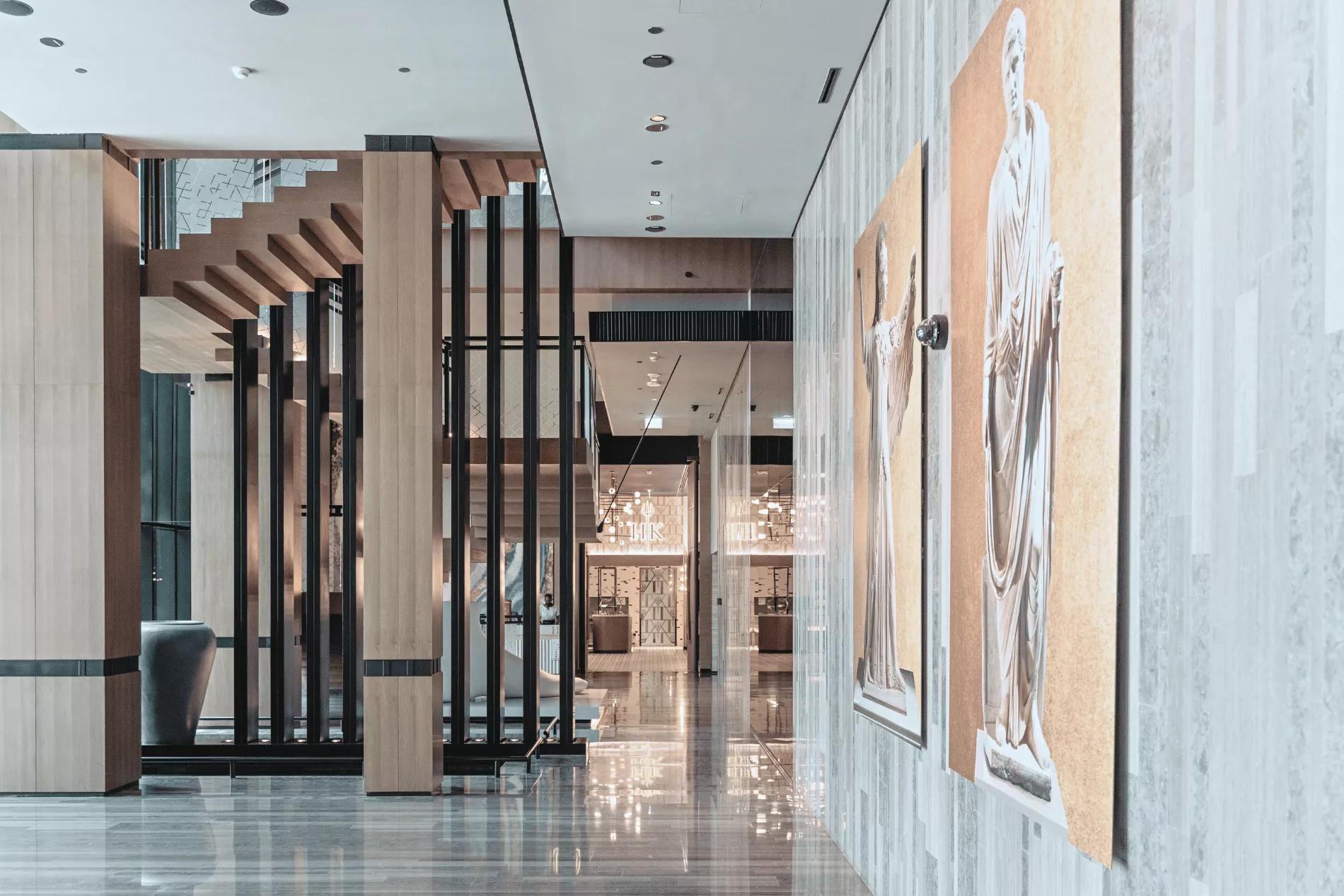
Organizing an event in a hotel looks simple until a surcharge appears for extra dismantling time, or until you find out the hotel gave no industry exclusivity on the day. Here is what to agree with the hotel before you commit to working together.
A hotel is the most common choice for a conference, gala, training or corporate event: under one roof you get a room, catering, accommodation and parking, and a single sales team coordinates everything. That convenience is, however, largely an illusion. A standard hotel offer is written to protect the hotel's interests, not the organizer's, and most of the real costs and risks only surface on site, on the day of the event or just before it, when it is too late to change anything.
That is why you must ask for details and go through the hotel contract carefully. This is where surcharges, restrictions and "we never agreed to that" hide, and they can spoil even a well-planned event. The scale of these gaps is often bigger than it seems. In practice, items that were missing from the first quote can raise the final bill by well over ten percent. This is not because hotels act in bad faith. It is because the offer describes the standard, while an event is always a departure from the standard, and those departures are exactly what you need to negotiate and put in writing.
In this article I describe what to agree with the hotel and write into the contract before you sign: from what to check during the site visit, through tech, catering and accommodation, to the clauses that save your budget when something goes wrong. This is a negotiation checklist, not a guide on "how to choose a nice room", because there are plenty of nice rooms, and the biggest difference is sometimes made by what is written in the small print.
Start with the goal and the script, not the room price
The most common mistake starts with the first inquiry. Someone asks "how much is a room for 150 people" before anyone has written down what is actually supposed to happen in that room. Without a script and an agenda, you cannot reliably compare offers or negotiate well. If you do not know what to ask for, the hotel will often price its own guesses about your needs, usually cautiously and to your disadvantage.
Before you send an inquiry to any venue, settle a few things on your side:
The real goal of the event, not just its name. A sales conference, an awards gala, a training and a product launch are four different events, even if they all "need a room for 150 people". The goal determines the room layout, the length of the content part and the balance between stage and networking.
Attendee profile: numbers, proportions, VIP guests, guests with disabilities, international guests. A group of 150 in theatre-style seating fits in a room where the same group at round banquet tables no longer does, because a banquet realistically needs about 1.5 to 2 square meters per person, not the 0.8 of a theatre setup.
A draft minute-by-minute run of show: registration, sessions, breaks, lunch, the evening part. All of this determines when the room has to be reset, how substantial lunch should be and whether you need extra space for guest registration.
Technical requirements that follow from the script: stage, sound, simultaneous interpreting, online streaming. A discussion panel, where the microphone has to reach the audience, looks different from a lecture, and both differ from a gala with performances and lighting.
The more of these decisions you make on your side, the more accurate and cheaper the offer you get in return. A well-prepared brief is not a formality but the cheapest negotiation tool, because it lets you talk specifically about what exactly the things you need will cost.
Site visit: what you will not see in the PDF offer
A site visit, meaning an on-site visit to the venue before signing the contract, is a mandatory part of event preparation. The hotel's offer shows the floor area and photos taken from the best angle and framing. It does not show the pillars in the middle of the room, the echo, or the smell of the kitchen drifting into the foyer. These are exactly the details that decide how the event will be perceived, and none of them fits in a price table.
During the site visit, check the things you cannot see in the sales brochure:
The room and its real layout. Capacity in the target setup (theatre, classroom, banquet, horseshoe) can be much smaller than declared once you add a stage, a dance floor and catering stations. You also need to check whether and where pillars or columns limit the view of the stage, and the ceiling height for rigging (hanging technical equipment and set elements). A room "for 200 people" with two pillars in the line of sight is really a room for 140 people with a good view.
Physical conditions. Daylight and the option of full blackout (essential for projections and video mapping), acoustics and echo, and the hour until which air conditioning and ventilation really run. A room where cooling switches off at 10 p.m. becomes unbearable with a hundred people and technical equipment running. Also check whether a sound system and microphones will be needed: with a group above roughly forty people, a speaker without a microphone can no longer be heard in the back rows.
Sensory aspects. Kitchen smells, noise from neighboring rooms and the lobby, the colors and condition of the interior. This hardly needs explaining: these elements are extremely important.
Functional surroundings. Restrooms (number, location, condition), a cloakroom, a foyer for registration and networking, and back-of-house space for staff, VIPs, the makeup artist and catering. These are inconspicuous elements that, with a large group, decide whether you get queues and chaos or not. Registering 200 people in a narrow corridor instead of a spacious foyer means a fifteen-minute queue and a poor first contact with the event.
Access, parking and surroundings. Check whether the route to the hotel is well signposted, how many parking spaces there are and whether parking is paid. For coaches or shuttle buses, confirm there is somewhere for them to stop. The look of the building from the outside and its neighborhood are also part of the guest's first impression.
A practical tip: go to the site visit with a checklist and your phone. Take photos and measure, and note down everything said in conversation with the thought that it is about to go into the contract. Anything agreed during the visit that is not in the contract does not exist on the day of the event.
Rooms and spaces: what exactly to put in the contract
The contract must name specific rooms, not "a room of X square meters". Hotels have several similar spaces, and which one you actually get should be stated on paper. In a hotel contract, it is worth specifying:
The exact rooms and the hours for which they are rented, including the plenary room and separate rooms for workshops or for VIP guests.
The hours set aside for build and dismantling, including, for example, whether you can get in the day before. With elaborate set design and tech, this is often a condition for finishing on time without express rates for the crew's night work. Building the stage and lighting can take half a day or more.
The right to exclusive use of the space: will the hotel let in a second group at the same time, in the adjacent room or in the shared foyer where you plan registration and coffee breaks? Two events sharing one foyer means two queues for one cloakroom and a clash of two atmospheres. An additional problem arises if the event running in parallel at the hotel belongs to a client from a similar company to yours, for example a competitor.
Flexibility and the cost of resetting the room: changing the layout from conference to banquet during the day may be charged separately (and it certainly takes time, which must be built into the run of show). Agree who does it, how long it takes and where the guests are in the meantime.
Tech and internet: where the surcharges hide
Tech is the most common source of hidden costs and of conflicts over supplier exclusivity. This is where offers differ the most, so you need to ask as precisely as possible.
What is included in the room price and what costs extra. A projector, screen, sound system, microphones and flipcharts are sometimes "included" only in the basic variant, and every additional wireless microphone, second screen or longer working time for the technician is a separate line item.
Compliance with the technical rider. The rider is the list of the production's technical requirements. Establish whether the hotel's equipment meets it or whether you need to bring your own, because this changes both cost and logistics. A low-brightness hotel projector in a room with windows and no blackout will produce an image nobody can see.
Permission to use an external tech supplier and technician. Some hotels have an exclusive in-house tech company or charge a fee for an outside crew to enter, a kind of technical "corkage". It is better to know this before signing the contract, because it decides whether you can work with your trusted crew at all.
Load-in and equipment logistics. The freight elevator, its dimensions and load capacity, the ramp, routes for transporting heavy equipment, delivery hours, and technical and security restrictions. No freight elevator for a room on the first floor can add hours to the build and require extra people to carry equipment.
Power supply. Available capacity, the number and placement of sockets, and for a large production a generator in case of failure. A weak installation "gives up" under the load of a stage and multimedia, and a tripped fuse during a presentation is the worst possible moment.
Internet. A separate, guaranteed bandwidth for production and online streaming, not the shared guest Wi-Fi, plus a wired network for the production crew. For streaming and hybrid events this is a requirement, not a nicety, because a broadcast over shared Wi-Fi will look unprofessional.
The hotel's technical support available on site during the event, not just "on call". When something stops working in the middle of a gala, minutes count.
Catering and drinks: menu, diets and the corkage trap
Very often, catering is what guests remember longest at an event and judge most harshly, and at the same time it is the area where cost ambiguities are easiest to create. Agree on:
The F&B minimum. This is the spending threshold for food and drinks below which the room price rises or the hotel will not rent the room separately. Agree the guaranteed number of guests for billing, because you will pay for it regardless of actual attendance, even if some guests do not turn up.
A menu with specific items and per-person prices, and the serving format (seated dinner, buffet, food stations, meaning live cooking and serving points). A seated dinner means higher service costs and "assigning" guests to tables, while a buffet has a lower unit cost but creates queues with large groups.
The number and type of meals and coffee breaks: how many there are, what they include, and whether coffee is available all the time or only in set windows. Continuous coffee availability costs more than two scheduled breaks, but at an all-day conference it can be worth it.
Diets. Vegetarian, vegan, gluten-free, halal, kosher and allergies. Agree how the hotel labels them on site so that guests do not have to ask about every dish. For international teams this is standard, not a nicety, and asking about preferences in the registration form is five minutes of work that saves the comfort of some guests.
The number of waiters assigned exclusively to your group, and the proximity of the kitchen. The temperature of the dishes and the pace of service depend on it. Too few staff at a seated dinner for 200 people means the last table gets cold food.
Exclusivity of the restaurant or zone. Find out whether the restaurant room is reserved exclusively for you during your event. If the same restaurant also serves the hotel's individual guests, this changes the pace, the atmosphere and the comfort of the meals.
Corkage. This is the hotel's fee for serving alcohol or drinks brought in from outside. If you plan to bring your own alcohol or a sponsor's drinks, agree the rate upfront, because it is sometimes charged per bottle and can wipe out the savings from buying it yourself. Also agree the bar rules: open bar, welcome drink, limits.
Accommodation: rooms, cancellation terms and billing
If the event involves an overnight stay (for all or some of the guests), it can affect the budget as much as the room and catering themselves.
The number and standard of rooms, with all room types intended for the group shown during the site visit, not just a showroom. It is worth seeing the weakest room in the pool too, because that is the one some guests will get.
Allotment and release date, meaning the cancellation terms. The allotment is the block of rooms reserved for your event's guests, and the release date is the date by which you can return unsold rooms at no cost. Without this clause you risk paying for rooms nobody occupied.
The group rate and what it includes: breakfast, parking, the tourist tax, access to leisure areas such as the spa or pool. Two offers with the "same" room price can differ by the value of breakfast and parking combined.
Payment rules. Who pays for the room and extra services (the company or the guest), deposits, handling of no-shows, meaning guests who do not turn up despite a reservation, and card pre-authorization at check-in.
Hotel day hours, as well as early check-in and late check-out for the VIP guests' team. Some guests often need a room earlier than the standard 3 p.m.
Quiet hours and other house rules
The hotel's house rules and the comfort of the hotel's own guests are as important as the script of your event, so they need to be agreed in advance and reconciled in writing.
Until what time music can play and when the hotel enforces quiet hours. A gala that "must end at 10 p.m. because of the house rules" is a completely different event from one planned until 2 a.m., and that is a fundamental difference for the evening script.
The permitted volume level and whether the room directly adjoins rooms of guests outside the event. Complaints from the rooms can cut a party short, regardless of what you agreed with the sales team.
The operating hours of air conditioning, security, reception and technical support after midnight, if the evening is to run longer. Air conditioning or heating switched off at a set hour is one of the hidden problems of long events.
Approvals and permits: pyrotechnic shows, heavy smoke (which can trigger fire detectors and call out the fire brigade), open flame, a banner blocking an emergency exit, drones, as well as fees for public playback of music (ZAiKS/STOART).
How much does it cost and where do the hidden costs lie?
There is no single price for a hotel event, because the cost depends on the number of guests, the format, the standard of the venue, the duration of the event, the scope of catering, the city and the date. That is why it is worth breaking the budget down into its components and calculating the cost per attendee. The total usually consists of room hire, catering and drinks, tech and stage, accommodation, service, and extras such as parking and security.
Separately, keep an eye on the items that are easy to miss in the first quote and that can raise the bill by well over ten percent:
corkage for your own alcohol or drinks,
a fee for an external tech crew to enter,
the F&B minimum and billing of the guaranteed number of guests,
overtime for service staff and tech after the agreed hour,
cleaning after the event and restoring the room to its original condition,
parking, cloakroom and security,
fees for public playback of music (ZAiKS/STOART),
fees for decorating the space (for example flowers on buffet tables),
transport, build and dismantling of equipment.
The most practical rule is to ask directly what is NOT included in the price. This question reveals more than studying the offer itself, because hotels rarely highlight what you will be charged extra for. A cheap room with expensive tech, high corkage and paid parking can end up costing more than a seemingly pricier all-in offer.
How to compare hotel offers so you are comparing like with like
The most common mistake at the quoting stage is comparing room prices instead of total costs. To make offers comparable:
Send an identical inquiry to at least three venues. The same parameters, the same script, the same number of people. Otherwise you are comparing apples with oranges, and each hotel will calculate "in its own way".
Compare total cost, not the room price. Add tech, corkage, the F&B minimum, parking and all surcharges. Reduce it to a cost per attendee.
Check what is included in the price and what costs extra, because this is where offers differ the most.
Assess the hotel's sales and service team. Speed and specifics in the answers at the quoting stage are the best predictor of how the hotel will behave on the day of the event. A team that stalls and answers in generalities during quoting will very likely behave the same way on the day.
The contract step by step and clauses that protect the organizer
A good contract is a detailed plan of the event plus clear rules for when something changes. Pay attention to:
A precise list. Specific rooms, hours, number of rooms, menu items, tech elements, each with its price and tax. Generalities always work in the hotel's favor.
A named contact person on the hotel side responsible for delivery on the day of the event, and a designated person on your side responsible for how it runs. It is also worth establishing whether the hotel's coordinator changes during the event, which happens with events lasting, for example, two days.
Terms for changing the number of guests. Until when and by how much you can adjust the headcount (without penalties or surcharges). Attendance almost always changes, and hotels often allow corrections only downward, up to a set percentage.
The cancellation policy and force majeure. Cost thresholds for cancelling at different dates, and a clause on unforeseeable events. Recent years have shown just how real this point can be.
The payment schedule. Advance payment, instalments, the final payment deadline, the deposit and the rules for its return. And for payments of any added extra costs, when they should be settled.
The liability of both parties. Not only penalties for damage on your side, but also the hotel's liability for failing to deliver the agreed services, for example non-working air conditioning, missing ordered equipment or a room delivered at a different standard. A contract that places obligations on only one party is a warning sign.
Insurance, GDPR and health and safety. Processing of attendee data, safety and fire protection matters, and for larger events a requirement for a liability policy.
Summary
A hotel contract should above all answer the question of what exactly the hotel provides during the event, for how much and on what terms. The bigger and more complex the event, the less room there should be for agreements made "on someone's word".
Before signing, check above all the scope of space hire, the availability hours of rooms and back-of-house areas, the rules for build and dismantling, and what happens if the tech crew arrives earlier. Catering should be agreed separately: the menu, number of guests, serving times, drinks, special diets and any additional fees. If the event includes accommodation, the number of rooms, their standard, the dates and the cancellation rules should also be clearly defined.
The costs that are easy to overlook are very important too: corkage, extra hours of service staff, cleaning, parking, access for technical vehicles, power connections and the use of additional equipment. For larger productions, it is also worth naming contact persons on both sides and agreeing who can make decisions during the event.
A good contract should therefore not be just a formality needed to book a room. It should organize the entire cooperation with the hotel, from the moment the crew arrives for the build to the end of the event and the final settlement. The more precisely you define these matters before the event, the fewer surprises you will have during it.
FAQ: frequently asked questions
What must you agree with the hotel before signing an event contract?
Specific rooms and hours including build time, the scope of tech included in the price, the rules for catering and corkage, room rates, the quiet-hours time, plus a contact person and the cancellation policy. This is the minimum that determines the cost and course of the event.
What are corkage and the F&B minimum?
Corkage is the hotel's fee for serving alcohol or drinks brought in from outside. The F&B minimum is the spending threshold for food and drinks below which the hotel raises the room price or will not rent the room separately. Both items can raise the bill significantly, which is why they are agreed before the contract is signed.
Will the hotel allow you to bring your own tech and an external DJ?
It depends on the venue, so it must be agreed before the contract is signed. Some hotels have an exclusive in-house tech company or charge a fee for an external crew to enter. If you work with trusted suppliers, ask about this at the very start of the conversation.
Until what time can an event at a hotel last?
It depends on the planned end time of the event, the time catering is served until, the quiet-hours rules and the proximity of rooms occupied by guests outside the event. The end time of a party with loud music and the permitted volume level are best written into the contract rather than negotiated during the evening, because then the hotel is the one dictating terms.
What are allotment and release date for accommodation?
The allotment is the block of rooms reserved for your event's guests, and the release date is the date by which you can return unsold rooms without incurring additional costs. Without this clause you risk paying for rooms that no attendee ended up occupying.
Why do a site visit if I already have the offer and photos?
Because the offer does not show pillars blocking the view, echo, kitchen smells, air conditioning hours or the real room layout in the target setup. These are exactly the details that decide how the event is perceived, and you can only see them on site.
Planning an event at a hotel and want to be sure you miss nothing?
Write to me. I will help you assess the offer, prepare a list of questions for the site visit and negotiate the clauses that protect your budget and the course of the event.
Organizing an event in a hotel looks simple until a surcharge appears for extra dismantling time, or until you find out the hotel gave no industry exclusivity on the day. Here is what to agree with the hotel before you commit to working together.
A hotel is the most common choice for a conference, gala, training or corporate event: under one roof you get a room, catering, accommodation and parking, and a single sales team coordinates everything. That convenience is, however, largely an illusion. A standard hotel offer is written to protect the hotel's interests, not the organizer's, and most of the real costs and risks only surface on site, on the day of the event or just before it, when it is too late to change anything.
That is why you must ask for details and go through the hotel contract carefully. This is where surcharges, restrictions and "we never agreed to that" hide, and they can spoil even a well-planned event. The scale of these gaps is often bigger than it seems. In practice, items that were missing from the first quote can raise the final bill by well over ten percent. This is not because hotels act in bad faith. It is because the offer describes the standard, while an event is always a departure from the standard, and those departures are exactly what you need to negotiate and put in writing.
In this article I describe what to agree with the hotel and write into the contract before you sign: from what to check during the site visit, through tech, catering and accommodation, to the clauses that save your budget when something goes wrong. This is a negotiation checklist, not a guide on "how to choose a nice room", because there are plenty of nice rooms, and the biggest difference is sometimes made by what is written in the small print.
Start with the goal and the script, not the room price
The most common mistake starts with the first inquiry. Someone asks "how much is a room for 150 people" before anyone has written down what is actually supposed to happen in that room. Without a script and an agenda, you cannot reliably compare offers or negotiate well. If you do not know what to ask for, the hotel will often price its own guesses about your needs, usually cautiously and to your disadvantage.
Before you send an inquiry to any venue, settle a few things on your side:
The real goal of the event, not just its name. A sales conference, an awards gala, a training and a product launch are four different events, even if they all "need a room for 150 people". The goal determines the room layout, the length of the content part and the balance between stage and networking.
Attendee profile: numbers, proportions, VIP guests, guests with disabilities, international guests. A group of 150 in theatre-style seating fits in a room where the same group at round banquet tables no longer does, because a banquet realistically needs about 1.5 to 2 square meters per person, not the 0.8 of a theatre setup.
A draft minute-by-minute run of show: registration, sessions, breaks, lunch, the evening part. All of this determines when the room has to be reset, how substantial lunch should be and whether you need extra space for guest registration.
Technical requirements that follow from the script: stage, sound, simultaneous interpreting, online streaming. A discussion panel, where the microphone has to reach the audience, looks different from a lecture, and both differ from a gala with performances and lighting.
The more of these decisions you make on your side, the more accurate and cheaper the offer you get in return. A well-prepared brief is not a formality but the cheapest negotiation tool, because it lets you talk specifically about what exactly the things you need will cost.
Site visit: what you will not see in the PDF offer
A site visit, meaning an on-site visit to the venue before signing the contract, is a mandatory part of event preparation. The hotel's offer shows the floor area and photos taken from the best angle and framing. It does not show the pillars in the middle of the room, the echo, or the smell of the kitchen drifting into the foyer. These are exactly the details that decide how the event will be perceived, and none of them fits in a price table.
During the site visit, check the things you cannot see in the sales brochure:
The room and its real layout. Capacity in the target setup (theatre, classroom, banquet, horseshoe) can be much smaller than declared once you add a stage, a dance floor and catering stations. You also need to check whether and where pillars or columns limit the view of the stage, and the ceiling height for rigging (hanging technical equipment and set elements). A room "for 200 people" with two pillars in the line of sight is really a room for 140 people with a good view.
Physical conditions. Daylight and the option of full blackout (essential for projections and video mapping), acoustics and echo, and the hour until which air conditioning and ventilation really run. A room where cooling switches off at 10 p.m. becomes unbearable with a hundred people and technical equipment running. Also check whether a sound system and microphones will be needed: with a group above roughly forty people, a speaker without a microphone can no longer be heard in the back rows.
Sensory aspects. Kitchen smells, noise from neighboring rooms and the lobby, the colors and condition of the interior. This hardly needs explaining: these elements are extremely important.
Functional surroundings. Restrooms (number, location, condition), a cloakroom, a foyer for registration and networking, and back-of-house space for staff, VIPs, the makeup artist and catering. These are inconspicuous elements that, with a large group, decide whether you get queues and chaos or not. Registering 200 people in a narrow corridor instead of a spacious foyer means a fifteen-minute queue and a poor first contact with the event.
Access, parking and surroundings. Check whether the route to the hotel is well signposted, how many parking spaces there are and whether parking is paid. For coaches or shuttle buses, confirm there is somewhere for them to stop. The look of the building from the outside and its neighborhood are also part of the guest's first impression.
A practical tip: go to the site visit with a checklist and your phone. Take photos and measure, and note down everything said in conversation with the thought that it is about to go into the contract. Anything agreed during the visit that is not in the contract does not exist on the day of the event.
Rooms and spaces: what exactly to put in the contract
The contract must name specific rooms, not "a room of X square meters". Hotels have several similar spaces, and which one you actually get should be stated on paper. In a hotel contract, it is worth specifying:
The exact rooms and the hours for which they are rented, including the plenary room and separate rooms for workshops or for VIP guests.
The hours set aside for build and dismantling, including, for example, whether you can get in the day before. With elaborate set design and tech, this is often a condition for finishing on time without express rates for the crew's night work. Building the stage and lighting can take half a day or more.
The right to exclusive use of the space: will the hotel let in a second group at the same time, in the adjacent room or in the shared foyer where you plan registration and coffee breaks? Two events sharing one foyer means two queues for one cloakroom and a clash of two atmospheres. An additional problem arises if the event running in parallel at the hotel belongs to a client from a similar company to yours, for example a competitor.
Flexibility and the cost of resetting the room: changing the layout from conference to banquet during the day may be charged separately (and it certainly takes time, which must be built into the run of show). Agree who does it, how long it takes and where the guests are in the meantime.
Tech and internet: where the surcharges hide
Tech is the most common source of hidden costs and of conflicts over supplier exclusivity. This is where offers differ the most, so you need to ask as precisely as possible.
What is included in the room price and what costs extra. A projector, screen, sound system, microphones and flipcharts are sometimes "included" only in the basic variant, and every additional wireless microphone, second screen or longer working time for the technician is a separate line item.
Compliance with the technical rider. The rider is the list of the production's technical requirements. Establish whether the hotel's equipment meets it or whether you need to bring your own, because this changes both cost and logistics. A low-brightness hotel projector in a room with windows and no blackout will produce an image nobody can see.
Permission to use an external tech supplier and technician. Some hotels have an exclusive in-house tech company or charge a fee for an outside crew to enter, a kind of technical "corkage". It is better to know this before signing the contract, because it decides whether you can work with your trusted crew at all.
Load-in and equipment logistics. The freight elevator, its dimensions and load capacity, the ramp, routes for transporting heavy equipment, delivery hours, and technical and security restrictions. No freight elevator for a room on the first floor can add hours to the build and require extra people to carry equipment.
Power supply. Available capacity, the number and placement of sockets, and for a large production a generator in case of failure. A weak installation "gives up" under the load of a stage and multimedia, and a tripped fuse during a presentation is the worst possible moment.
Internet. A separate, guaranteed bandwidth for production and online streaming, not the shared guest Wi-Fi, plus a wired network for the production crew. For streaming and hybrid events this is a requirement, not a nicety, because a broadcast over shared Wi-Fi will look unprofessional.
The hotel's technical support available on site during the event, not just "on call". When something stops working in the middle of a gala, minutes count.
Catering and drinks: menu, diets and the corkage trap
Very often, catering is what guests remember longest at an event and judge most harshly, and at the same time it is the area where cost ambiguities are easiest to create. Agree on:
The F&B minimum. This is the spending threshold for food and drinks below which the room price rises or the hotel will not rent the room separately. Agree the guaranteed number of guests for billing, because you will pay for it regardless of actual attendance, even if some guests do not turn up.
A menu with specific items and per-person prices, and the serving format (seated dinner, buffet, food stations, meaning live cooking and serving points). A seated dinner means higher service costs and "assigning" guests to tables, while a buffet has a lower unit cost but creates queues with large groups.
The number and type of meals and coffee breaks: how many there are, what they include, and whether coffee is available all the time or only in set windows. Continuous coffee availability costs more than two scheduled breaks, but at an all-day conference it can be worth it.
Diets. Vegetarian, vegan, gluten-free, halal, kosher and allergies. Agree how the hotel labels them on site so that guests do not have to ask about every dish. For international teams this is standard, not a nicety, and asking about preferences in the registration form is five minutes of work that saves the comfort of some guests.
The number of waiters assigned exclusively to your group, and the proximity of the kitchen. The temperature of the dishes and the pace of service depend on it. Too few staff at a seated dinner for 200 people means the last table gets cold food.
Exclusivity of the restaurant or zone. Find out whether the restaurant room is reserved exclusively for you during your event. If the same restaurant also serves the hotel's individual guests, this changes the pace, the atmosphere and the comfort of the meals.
Corkage. This is the hotel's fee for serving alcohol or drinks brought in from outside. If you plan to bring your own alcohol or a sponsor's drinks, agree the rate upfront, because it is sometimes charged per bottle and can wipe out the savings from buying it yourself. Also agree the bar rules: open bar, welcome drink, limits.
Accommodation: rooms, cancellation terms and billing
If the event involves an overnight stay (for all or some of the guests), it can affect the budget as much as the room and catering themselves.
The number and standard of rooms, with all room types intended for the group shown during the site visit, not just a showroom. It is worth seeing the weakest room in the pool too, because that is the one some guests will get.
Allotment and release date, meaning the cancellation terms. The allotment is the block of rooms reserved for your event's guests, and the release date is the date by which you can return unsold rooms at no cost. Without this clause you risk paying for rooms nobody occupied.
The group rate and what it includes: breakfast, parking, the tourist tax, access to leisure areas such as the spa or pool. Two offers with the "same" room price can differ by the value of breakfast and parking combined.
Payment rules. Who pays for the room and extra services (the company or the guest), deposits, handling of no-shows, meaning guests who do not turn up despite a reservation, and card pre-authorization at check-in.
Hotel day hours, as well as early check-in and late check-out for the VIP guests' team. Some guests often need a room earlier than the standard 3 p.m.
Quiet hours and other house rules
The hotel's house rules and the comfort of the hotel's own guests are as important as the script of your event, so they need to be agreed in advance and reconciled in writing.
Until what time music can play and when the hotel enforces quiet hours. A gala that "must end at 10 p.m. because of the house rules" is a completely different event from one planned until 2 a.m., and that is a fundamental difference for the evening script.
The permitted volume level and whether the room directly adjoins rooms of guests outside the event. Complaints from the rooms can cut a party short, regardless of what you agreed with the sales team.
The operating hours of air conditioning, security, reception and technical support after midnight, if the evening is to run longer. Air conditioning or heating switched off at a set hour is one of the hidden problems of long events.
Approvals and permits: pyrotechnic shows, heavy smoke (which can trigger fire detectors and call out the fire brigade), open flame, a banner blocking an emergency exit, drones, as well as fees for public playback of music (ZAiKS/STOART).
How much does it cost and where do the hidden costs lie?
There is no single price for a hotel event, because the cost depends on the number of guests, the format, the standard of the venue, the duration of the event, the scope of catering, the city and the date. That is why it is worth breaking the budget down into its components and calculating the cost per attendee. The total usually consists of room hire, catering and drinks, tech and stage, accommodation, service, and extras such as parking and security.
Separately, keep an eye on the items that are easy to miss in the first quote and that can raise the bill by well over ten percent:
corkage for your own alcohol or drinks,
a fee for an external tech crew to enter,
the F&B minimum and billing of the guaranteed number of guests,
overtime for service staff and tech after the agreed hour,
cleaning after the event and restoring the room to its original condition,
parking, cloakroom and security,
fees for public playback of music (ZAiKS/STOART),
fees for decorating the space (for example flowers on buffet tables),
transport, build and dismantling of equipment.
The most practical rule is to ask directly what is NOT included in the price. This question reveals more than studying the offer itself, because hotels rarely highlight what you will be charged extra for. A cheap room with expensive tech, high corkage and paid parking can end up costing more than a seemingly pricier all-in offer.
How to compare hotel offers so you are comparing like with like
The most common mistake at the quoting stage is comparing room prices instead of total costs. To make offers comparable:
Send an identical inquiry to at least three venues. The same parameters, the same script, the same number of people. Otherwise you are comparing apples with oranges, and each hotel will calculate "in its own way".
Compare total cost, not the room price. Add tech, corkage, the F&B minimum, parking and all surcharges. Reduce it to a cost per attendee.
Check what is included in the price and what costs extra, because this is where offers differ the most.
Assess the hotel's sales and service team. Speed and specifics in the answers at the quoting stage are the best predictor of how the hotel will behave on the day of the event. A team that stalls and answers in generalities during quoting will very likely behave the same way on the day.
The contract step by step and clauses that protect the organizer
A good contract is a detailed plan of the event plus clear rules for when something changes. Pay attention to:
A precise list. Specific rooms, hours, number of rooms, menu items, tech elements, each with its price and tax. Generalities always work in the hotel's favor.
A named contact person on the hotel side responsible for delivery on the day of the event, and a designated person on your side responsible for how it runs. It is also worth establishing whether the hotel's coordinator changes during the event, which happens with events lasting, for example, two days.
Terms for changing the number of guests. Until when and by how much you can adjust the headcount (without penalties or surcharges). Attendance almost always changes, and hotels often allow corrections only downward, up to a set percentage.
The cancellation policy and force majeure. Cost thresholds for cancelling at different dates, and a clause on unforeseeable events. Recent years have shown just how real this point can be.
The payment schedule. Advance payment, instalments, the final payment deadline, the deposit and the rules for its return. And for payments of any added extra costs, when they should be settled.
The liability of both parties. Not only penalties for damage on your side, but also the hotel's liability for failing to deliver the agreed services, for example non-working air conditioning, missing ordered equipment or a room delivered at a different standard. A contract that places obligations on only one party is a warning sign.
Insurance, GDPR and health and safety. Processing of attendee data, safety and fire protection matters, and for larger events a requirement for a liability policy.
Summary
A hotel contract should above all answer the question of what exactly the hotel provides during the event, for how much and on what terms. The bigger and more complex the event, the less room there should be for agreements made "on someone's word".
Before signing, check above all the scope of space hire, the availability hours of rooms and back-of-house areas, the rules for build and dismantling, and what happens if the tech crew arrives earlier. Catering should be agreed separately: the menu, number of guests, serving times, drinks, special diets and any additional fees. If the event includes accommodation, the number of rooms, their standard, the dates and the cancellation rules should also be clearly defined.
The costs that are easy to overlook are very important too: corkage, extra hours of service staff, cleaning, parking, access for technical vehicles, power connections and the use of additional equipment. For larger productions, it is also worth naming contact persons on both sides and agreeing who can make decisions during the event.
A good contract should therefore not be just a formality needed to book a room. It should organize the entire cooperation with the hotel, from the moment the crew arrives for the build to the end of the event and the final settlement. The more precisely you define these matters before the event, the fewer surprises you will have during it.
FAQ: frequently asked questions
What must you agree with the hotel before signing an event contract?
Specific rooms and hours including build time, the scope of tech included in the price, the rules for catering and corkage, room rates, the quiet-hours time, plus a contact person and the cancellation policy. This is the minimum that determines the cost and course of the event.
What are corkage and the F&B minimum?
Corkage is the hotel's fee for serving alcohol or drinks brought in from outside. The F&B minimum is the spending threshold for food and drinks below which the hotel raises the room price or will not rent the room separately. Both items can raise the bill significantly, which is why they are agreed before the contract is signed.
Will the hotel allow you to bring your own tech and an external DJ?
It depends on the venue, so it must be agreed before the contract is signed. Some hotels have an exclusive in-house tech company or charge a fee for an external crew to enter. If you work with trusted suppliers, ask about this at the very start of the conversation.
Until what time can an event at a hotel last?
It depends on the planned end time of the event, the time catering is served until, the quiet-hours rules and the proximity of rooms occupied by guests outside the event. The end time of a party with loud music and the permitted volume level are best written into the contract rather than negotiated during the evening, because then the hotel is the one dictating terms.
What are allotment and release date for accommodation?
The allotment is the block of rooms reserved for your event's guests, and the release date is the date by which you can return unsold rooms without incurring additional costs. Without this clause you risk paying for rooms that no attendee ended up occupying.
Why do a site visit if I already have the offer and photos?
Because the offer does not show pillars blocking the view, echo, kitchen smells, air conditioning hours or the real room layout in the target setup. These are exactly the details that decide how the event is perceived, and you can only see them on site.
Planning an event at a hotel and want to be sure you miss nothing?
Write to me. I will help you assess the offer, prepare a list of questions for the site visit and negotiate the clauses that protect your budget and the course of the event.
An offer for your event
Want an offer matched to the scale of your event?
Leave your e-mail address and I will send back a short collaboration proposal and the scope of actions it is worth starting with when planning a B2B event.
No spam, just a reply about your offer. Your message goes to kontakt@anitachabrowska.pl.
An offer for your event
Want an offer matched to the scale of your event?
Leave your e-mail address and I will send back a short collaboration proposal and the scope of actions it is worth starting with when planning a B2B event.
No spam, just a reply about your offer. Your message goes to kontakt@anitachabrowska.pl.
An offer for your event
Want an offer matched to the scale of your event?
Leave your e-mail address and I will send back a short collaboration proposal and the scope of actions it is worth starting with when planning a B2B event.
No spam, just a reply about your offer. Your message goes to kontakt@anitachabrowska.pl.